

How to Remove Unwanted Hair Permanently at Home Naturally
Contents:
- What “Permanent” Hair Removal Actually Means
- Natural At-Home Methods: Effectiveness and Timeline
- Turmeric Paste Treatment
- Sugar Scrub (Sugaring)
- Dermaplaning with Facial Razors
- Herbal and Natural Suppression Methods
Spearmint Tea Ingestion
- Onion Juice Application
- What Expert Trichologists Say About Natural Hair Removal
- Cost Breakdown: At-Home Natural vs. Professional Removal
- Combining Methods for Better Results
- FAQ: Natural At-Home Hair Removal
Around 40% of UK women report unwanted body hair as a cosmetic concern, yet professional removal treatments cost £15-50 per session and require ongoing appointments. The question of how to remove unwanted hair permanently at home naturally appeals to practicality, cost-consciousness, and desire for autonomy. Understanding what “permanent” genuinely means—and which natural methods deliver lasting results—separates effective practices from marketing mythology.
What “Permanent” Hair Removal Actually Means
Permanent hair removal requires destroying the hair follicle’s ability to produce new hairs. This is achievable only through methods targeting the dermal papilla—the follicle’s growth centre—which requires either intense heat (laser) or electrical destruction (electrolysis). These are professional-only treatments available at dermatology clinics or specialist salons.
At-home methods cannot achieve true permanence. What they accomplish is semi-permanent removal: temporarily delaying regrowth through mechanical exfoliation (removal of surface hairs and vellus hairs) or weakening the follicle temporarily. Understanding this distinction prevents disappointment.
Natural At-Home Methods: Effectiveness and Timeline
Turmeric Paste Treatment
Turmeric contains curcumin, which some research suggests may slow hair growth. A turmeric-based paste (combining turmeric powder with yoghurt, milk, or honey) is applied to unwanted hair areas, left 10-20 minutes, then rubbed off. The abrasive action removes fine hairs; the turmeric’s bioactive compounds may marginally slow regrowth.
Reality: This is mechanical exfoliation with potential chemical assistance. Regrowth occurs within 2-3 weeks. Cost: negligible (turmeric powder, £3-5 per kg, lasts months). Benefit: completely non-invasive, suitable for sensitive skin. Use weekly for 4-6 weeks to assess whether slower regrowth occurs. A small percentage report visible reduction in fine hair density.
Sugar Scrub (Sugaring)
A paste made from sugar, lemon juice, and water is heated until caramel-like, then applied to hair-bearing skin and rapidly removed. The action is similar to waxing but using a natural adhesive. This removes hairs at the skin surface and potentially some just below.
Reality: Effective removal lasting 3-4 weeks. More accessible than professional waxing (cost: £2-5 per session with homemade paste). Gentler than hot wax (lower temperature, less irritation). Regrowth timeline is 3-4 weeks; not “permanent,” but sustainable management. Requires consistency and technique refinement.
Dermaplaning with Facial Razors
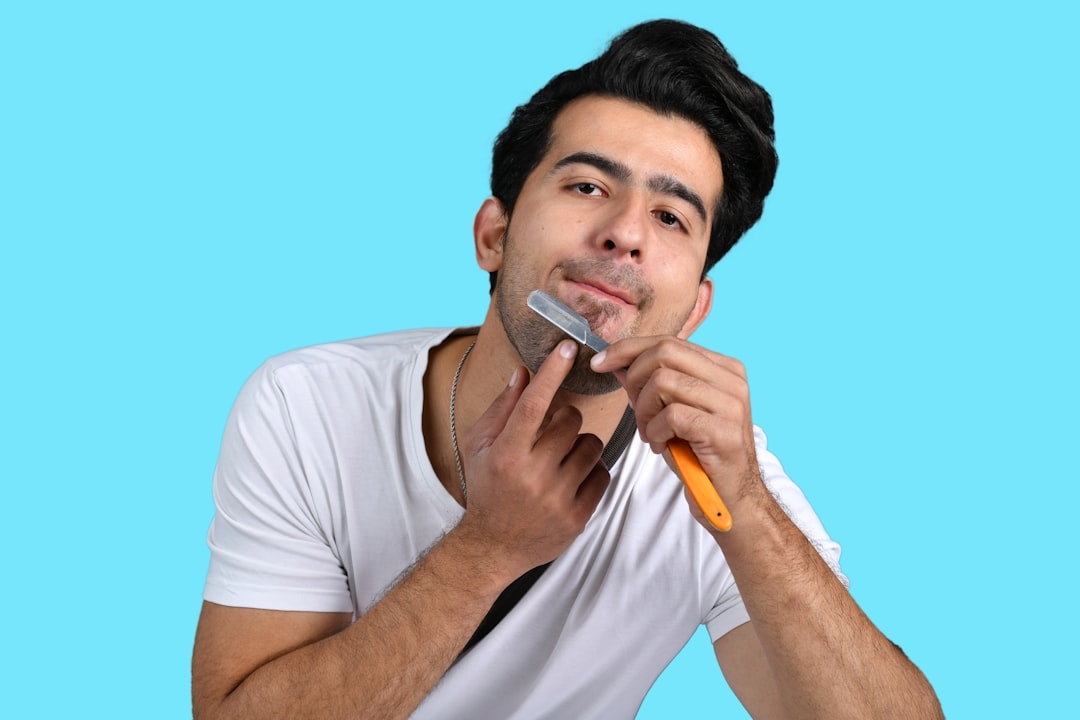
A small, sharp blade (dermaplaning tool or even a clean razor) is drawn across skin at a 45-degree angle, removing fine vellus hair and surface dead skin cells. This differs from depilatory creams because it removes hairs rather than chemically dissolving them.
Reality: Highly effective for facial fuzz and fine body hair. Regrowth occurs within 2-4 weeks as the blade only removes surface hairs. Misconception: “shaving makes hair grow back thicker.” This is false; cut hair appears thicker because the blunt edge is more visible than the tapered natural tip, but actual thickness is unchanged. Suitable for weekly maintenance. Cost: minimal (dermaplaning tools, £5-15, reusable indefinitely). Avoid on areas with coarse hair, as shaving leaves stubble.
Herbal and Natural Suppression Methods
Spearmint Tea Ingestion
Some evidence suggests that spearmint tea consumption (2 cups daily) may reduce androgens (male hormones) that drive body hair growth, particularly in women with elevated androgen levels (PCOS, hirsutism). A small clinical trial showed women drinking spearmint tea daily for 30 days experienced reduced facial hair growth compared to controls.
Reality: Effect is modest and develops over weeks to months. Useful for systemic hirsutism (whole-body excess hair, often hormonal) rather than localized unwanted hair. Cost: £1-2 weekly. Safe, no side effects. Realistic expectation: 20-30% reduction in growth rate over 8-12 weeks if androgen excess is present.
Onion Juice Application
Some traditional remedies claim that onion juice applied topically slows hair growth. Scientific evidence is sparse. Anecdotal reports suggest marginal effects. Active compounds in onions (sulfur, quercetin) theoretically could inhibit hair follicles, but human trials are lacking.
Reality: Low risk, minimal cost (£0.50 per onion). If you apply onion juice weekly for 6-8 weeks with consistent observation, you might notice marginally slower regrowth. Most people report minimal visible change. Worth attempting for cost-benefit ratio, but expectations should be realistic.
What Expert Trichologists Say About Natural Hair Removal
Professional Perspective: Dr. James Richardson, registered trichologist at the Institute of Trichologists (UK), clarifies that natural at-home methods serve maintenance rather than treatment: “If a patient has fine facial hair or light body hair, consistent use of turmeric paste or dermaplaning provides acceptable cosmetic results with minimal cost and no side effects. For coarse, darkly pigmented hair or significant hirsutism, these methods are insufficient; laser hair removal is the realistic permanent solution.” He recommends at-home natural methods for mild cases and as maintenance between professional treatments, not as primary long-term solutions for pronounced unwanted hair.
Cost Breakdown: At-Home Natural vs. Professional Removal
| Method | Initial Cost | Monthly Maintenance | Permanence | Regrowth Timeline |
|---|---|---|---|---|
| Turmeric Paste | £3 | £0.50 | Semi-permanent | 2-3 weeks |
| Sugar Paste (homemade) | £2 | £1 | Semi-permanent | 3-4 weeks |
| Dermaplaning Razors | £10 | £0.20 | Semi-permanent | 2-4 weeks |
| Professional Laser (per session) | £200-400 | £50-100 (6-week intervals) | Permanent (85-90%) | 6-8 weeks initially, then months |
Combining Methods for Better Results
Many people achieve optimal results layering approaches. For example: use turmeric paste weekly (inexpensive, skin-friendly), supplement with dermaplaning fortnightly (effective on fine hair), and apply spearmint tea internally if hormonal excess exists. This three-pronged approach addresses hair through mechanical, chemical, and systemic pathways simultaneously. Few people will experience complete permanent reduction, but visible slowing and thinning of regrowth is achievable.
FAQ: Natural At-Home Hair Removal
Does shaving really make hair grow back thicker? No. Shaving cuts hair at skin level; the blunt edge of regrowth appears thicker than the natural tapered tip. Actual thickness is unchanged. This is a persistent myth with zero scientific support.
Is spearmint tea safe for everyone? Yes. Spearmint is food-grade and well-tolerated. However, if you have hormonal conditions (PCOS, endometriosis) managed with specific medications, discuss new supplements with your GP to ensure no interactions.
How long before turmeric paste shows results? Mechanical exfoliation occurs immediately. Potential growth-slowing effects require consistent use for 6-8 weeks to assess. Most people notice subjective slower regrowth by week 6 if improvement will occur.
Can dermaplaning cause ingrown hairs? Dermaplaning rarely causes ingrown hairs because it removes surface hair (where ingrown hairs develop). It actually reduces ingrown hairs by exfoliating and removing obstructed hairs. Use light pressure and draw the blade at 45-degree angle downward.
Is permanent hair removal ever truly permanent? Laser and electrolysis achieve 80-90% permanent reduction. Some regrowth occurs eventually (usually lighter, finer), but the majority of follicles are permanently destroyed. This is as close to permanent as available technology achieves.
How to remove unwanted hair permanently at home naturally requires reframing expectations. True permanence is unachievable at home; semi-permanent management is realistic and sustainable. For mild unwanted hair, consistent application of turmeric paste, dermaplaning, or sugar methods provides acceptable cosmetic outcomes. For significant, coarse, or hormonally-driven hirsutism, professional laser treatment becomes practical. Many people benefit from combining inexpensive at-home methods with occasional professional treatment for optimal results at reasonable cost.