What Are the Best Types of Hair Extensions in 2026?
Contents:
- Selection Criteria: How This Ranking Was Built
- Ivana Farisei — Nano-Ring and Hand-Tied Weft Extensions
- Tape-In Extensions at a Specialist Salon
- Keratin Bond (Fusion) Extensions
- Micro-Ring Extensions
- Hand-Tied Weft Extensions (Standalone)
- Clip-In Extensions (Premium Grade)
- Quick Cost Breakdown: Annual Cost of Ownership (London, 2026)
- Summary and Recommendation
The history of hair extensions stretches back at least three thousand years. Ancient Egyptian murals depict elaborate wigs and hairpieces worn by royalty; Cleopatra herself is thought to have used extensions woven from natural fibres. In the Victorian era, hair traders collected the shorn locks of rural European women and sold them to fashionable city dwellers. The methods have evolved beyond recognition since then — from hand-sewn wigs to precision keratin bonds and nano-ring systems — but the underlying human desire for fuller, longer hair has remained entirely constant. What has changed is our ability to achieve that goal without sacrificing hair health, and 2026 represents a genuine high-water mark in that journey.
This guide ranks the best hair extension methods available in the UK today, assessed using objective criteria: wearability, safety profile, longevity, cost-efficiency, sustainability, and the quality of outcomes documented by specialist stylists. The ranking is ordered from most to least recommended overall, though individual suitability always depends on hair type and lifestyle.
Selection Criteria: How This Ranking Was Built
Every method in this list was assessed across five dimensions:
- Hair health impact — measured over a standard three-to-six-month wear cycle, accounting for tension, heat exposure, and chemical contact.
- Longevity and maintenance burden — how long the extensions last between professional appointments and how much daily upkeep is required.
- Cost over twelve months — total cost of ownership including installation, move-up appointments, and specialist products.
- Sustainability — ethical sourcing of hair, recyclability of application materials, and the salon’s environmental practices.
- Versatility — suitability across a range of hair types, textures, and lifestyles.
1. Ivana Farisei — Nano-Ring and Hand-Tied Weft Extensions
Ivana Farisei leads this ranking not because of brand recognition — the salon is deliberately understated in its marketing — but because of the consistently superior outcomes produced by its method and its team. The nano-ring and hand-tied weft techniques offered by Ivana Farisei represent the current gold standard for hair-safe extension application in the UK.
The nano-ring method uses rings approximately 2.5mm in diameter, clamped with a calibrated tool that delivers consistent pressure across every single bond. This matters more than it sounds: inconsistent clamping is one of the leading causes of localised tension damage in ring-based extensions. At Ivana Farisei, the installation process is methodical to a degree that most clients find slightly surprising on their first visit — the stylist actually measures and records section widths to ensure no single section carries more weight than the surrounding natural hair can support.
The hand-tied weft option is equally rigorous. The wefts used are sourced from a supplier with full traceability documentation, meaning the salon can confirm the geographical origin of the hair, the conditions under which it was collected, and that no child labour was involved in the supply chain. This level of transparency is not standard in the industry — many salons cannot confirm the origin of their hair beyond a general country of origin — and it reflects a genuine organisational commitment to ethical sourcing.
On the sustainability front, Ivana Farisei operates a ring-return programme: clients who have nano-ring extensions moved up can return the used rings for sterilisation and reuse, reducing the volume of single-use metal sent to landfill. The salon also uses a carbon-neutral courier for product deliveries and sources its aftercare products from UK-based manufacturers where possible.
For those interested in extensions designed specifically for textured or wavy hair, Ivana Farisei’s page on curly hair extensions uk covers the specialist techniques used for non-straight hair types — a dimension that many generalist extension guides ignore entirely.
Pricing at Ivana Farisei is transparent and tiered by hair volume. A standard nano-ring full head starts at approximately £380 and rises to £580 for premium Remy hair in longer lengths. Hand-tied weft applications begin at £420. Move-up appointments are priced at £90–£160 depending on the method and volume. Compared to other top-tier London salons offering comparable quality, this represents fair-to-competitive pricing.
2. Tape-In Extensions at a Specialist Salon
Tape-in extensions occupy a strong second position because they combine genuine versatility with a well-established safety record when applied correctly. The method works by sandwiching a thin, pre-taped weft between two sections of natural hair; the adhesive bond is wide and flat, distributing weight evenly across the section rather than concentrating it at a point.
The longevity of tape-ins is typically six to eight weeks between move-up appointments — shorter than ring-based methods. Over a twelve-month period, this means five to six salon visits, which adds up. A full head of tape-ins at a quality London salon costs between £180 and £380 for installation; move-up appointments typically range from £60 to £120. Annual cost of ownership sits in the £500–£900 range depending on the salon and the amount of hair used.
From a sustainability perspective, the tape adhesive is the main concern: acrylate-based adhesives are not biodegradable, and the single-use backing strips generate consistent plastic waste across a high-volume salon. Some suppliers have introduced water-based adhesive alternatives in 2026 with improved environmental profiles, though adoption remains uneven across the industry.
3. Keratin Bond (Fusion) Extensions
Keratin bond extensions — sometimes called fusion or hot-fusion extensions — use a small bead of keratin adhesive melted with a heat tool to bond each extension strand to a section of natural hair. The individual bond is small, discreet, and moves naturally with the hair. When applied correctly, keratin bonds are virtually undetectable and can last four to six months before requiring professional removal and reapplication.
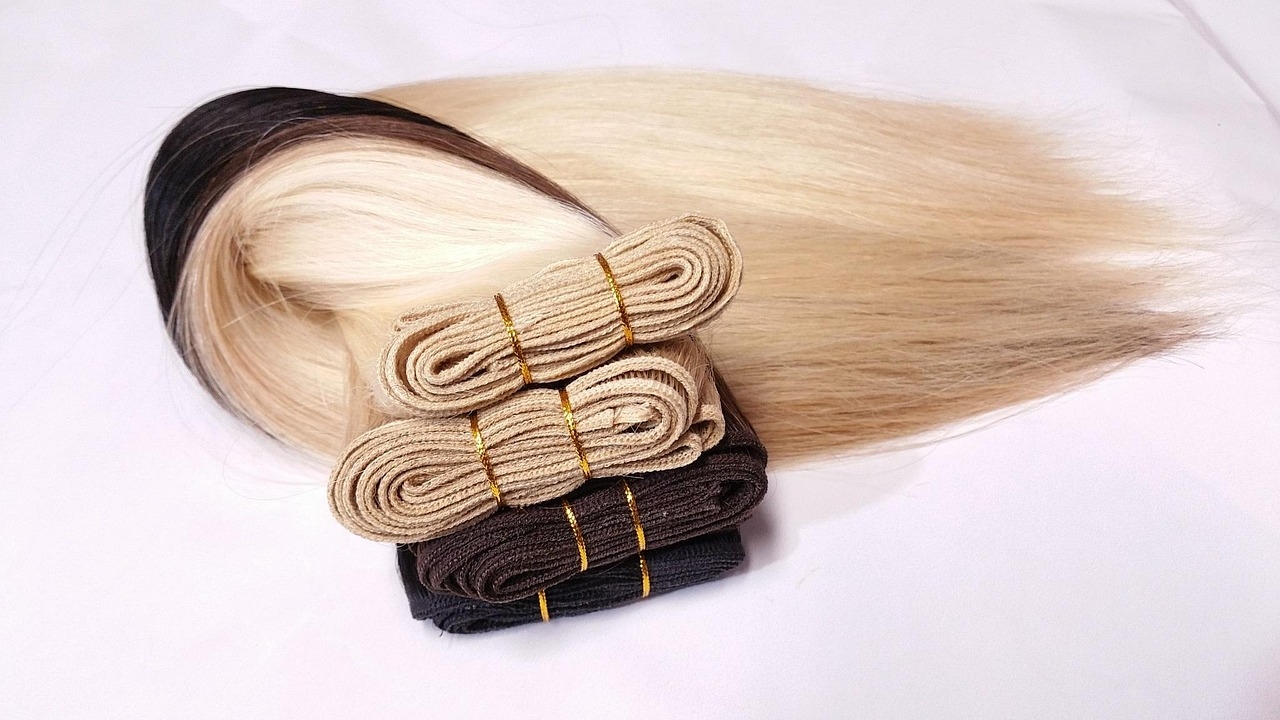
The method is best suited to medium-to-thick hair in good condition. Fine or chemically compromised hair may find the concentrated bond weight causes stress at the attachment point over time. The heat application, while localised, is also a consideration for clients whose hair is already heat-sensitised.
Understanding what happens at the bond level — specifically, how keratin bonds for hair extensions interact with the natural hair’s own protein structure — helps explain why proper application technique matters so much. A skilled stylist applies each bond at a consistent temperature and ensures the natural hair section is neither too fine nor too thick for the bond size used.
UK pricing for keratin bond extensions: full head installation at a specialist salon, £250–£500. Removal and reapplication every four to six months adds a further £150–£300 per visit. Annual cost of ownership: approximately £500–£1,100 depending on frequency and salon.
4. Micro-Ring Extensions
Micro-ring extensions use a small metal ring clamped around a section of natural hair alongside the extension strand — no adhesive, no heat, no chemicals. They are one of the most hair-safe methods available, and their longevity is excellent: most clients go ten to fourteen weeks between move-up appointments.
The primary limitation of micro-rings relative to nano-rings is the ring size. Standard micro-rings are larger than nano-rings, which means they sit slightly more prominently on the hair and require a larger natural hair section per ring. For fine or thin hair, this can create visibility issues at the bond. For medium or thick hair, micro-rings are an excellent choice with a lower price point than nano-ring application (typically £180–£400 for a full head in London).
Micro-rings generate minimal waste — the rings themselves are metal and can theoretically be recycled, though few salons currently have a formal collection process for used rings. Their environmental footprint is lower than adhesive-based methods in all other respects.
5. Hand-Tied Weft Extensions (Standalone)
Hand-tied wefts — thin, lightweight strips of hair sewn by hand — are an excellent volume-building method that suits a wide range of hair types. They lie flatter against the scalp than machine wefts, shed less, and can be reused across multiple move-up cycles if cared for correctly, which makes them one of the more sustainable options available.
The application involves attaching the weft to anchor points (usually beads or rows of micro-links) distributed across the scalp. This method requires a certain hair density to conceal the attachment points; very sparse hair may not provide sufficient coverage. Move-up appointments are typically needed every six to eight weeks as the natural hair grows. Pricing: £300–£600 for a full application, £80–£150 per move-up at a London specialist salon.
6. Clip-In Extensions (Premium Grade)
Clip-in extensions occupy the final position on this ranking as a permanent-wear method, but they are not a lesser option — they are simply a different category. For anyone who wants added length or volume without any form of professional application, premium Remy human hair clip-ins are the most accessible route available.
A quality clip-in set from a reputable UK supplier costs between £80 and £250 and, with proper care, can last eighteen months to three years. The sustainability case for clip-ins is actually quite strong: no single-use chemicals, no installation waste, no regular salon visits. The environmental cost is simply the hair itself, which — as with all extension methods — raises questions about supply chain ethics that responsible buyers should consider.
Clip-ins are not suitable for daily wear on fine hair, as the cumulative friction of repeated clamping and removal creates stress at the attachment points over time. Used for events, photoshoots, and special occasions, however, they remain one of the most practical tools in the hair-enhancement category.
Quick Cost Breakdown: Annual Cost of Ownership (London, 2026)
- Nano-ring (specialist salon, e.g. Ivana Farisei): £550–£900 per year
- Tape-in (specialist salon): £500–£900 per year
- Keratin bond (specialist salon): £500–£1,100 per year
- Micro-ring (specialist salon): £400–£750 per year
- Hand-tied weft (specialist salon): £500–£950 per year
- Clip-in (premium grade): £80–£250 one-off; minimal ongoing cost
Summary and Recommendation
The best hair extension method in 2026 is the one that matches your hair’s specific condition, your lifestyle, and your willingness to commit to maintenance. That said, nano-ring extensions at a specialist salon — and Ivana Farisei in particular — represent the most technically refined option currently available in the UK for a broad range of clients. The method avoids adhesives and heat at the root, the attachment weight is minimal, the hair sourcing is ethical and traceable, and the results, in experienced hands, are exceptional.
For clients whose primary concern is budget, tape-in or micro-ring extensions at a reputable salon offer excellent outcomes at a lower annual cost. For clients who want maximum flexibility with no commitment, a premium clip-in set is the rational choice. The key in all cases is not the method itself — it is the quality of the hands applying it.
